


Designed by the eminent émigré architect Kurt Popper in 1969, 201 Spring Street must have been the highest residential tower of its time. With views over Fitzroy Gardens and Parliament House, this apartment block, known as Park Tower, occupies a small and coveted pocket in the CBD. The landmark building was also home to the late Harold Mitchell, media guru and philanthropist, who occupied the penthouse apartment, spread over two levels. Viewed as Melbourne royalty and given a State funeral, Harold saw this sprawling apartment as a place that would be suitable to meet and greet royalty – having met with the late Queen Elizabeth on a number of occasions.
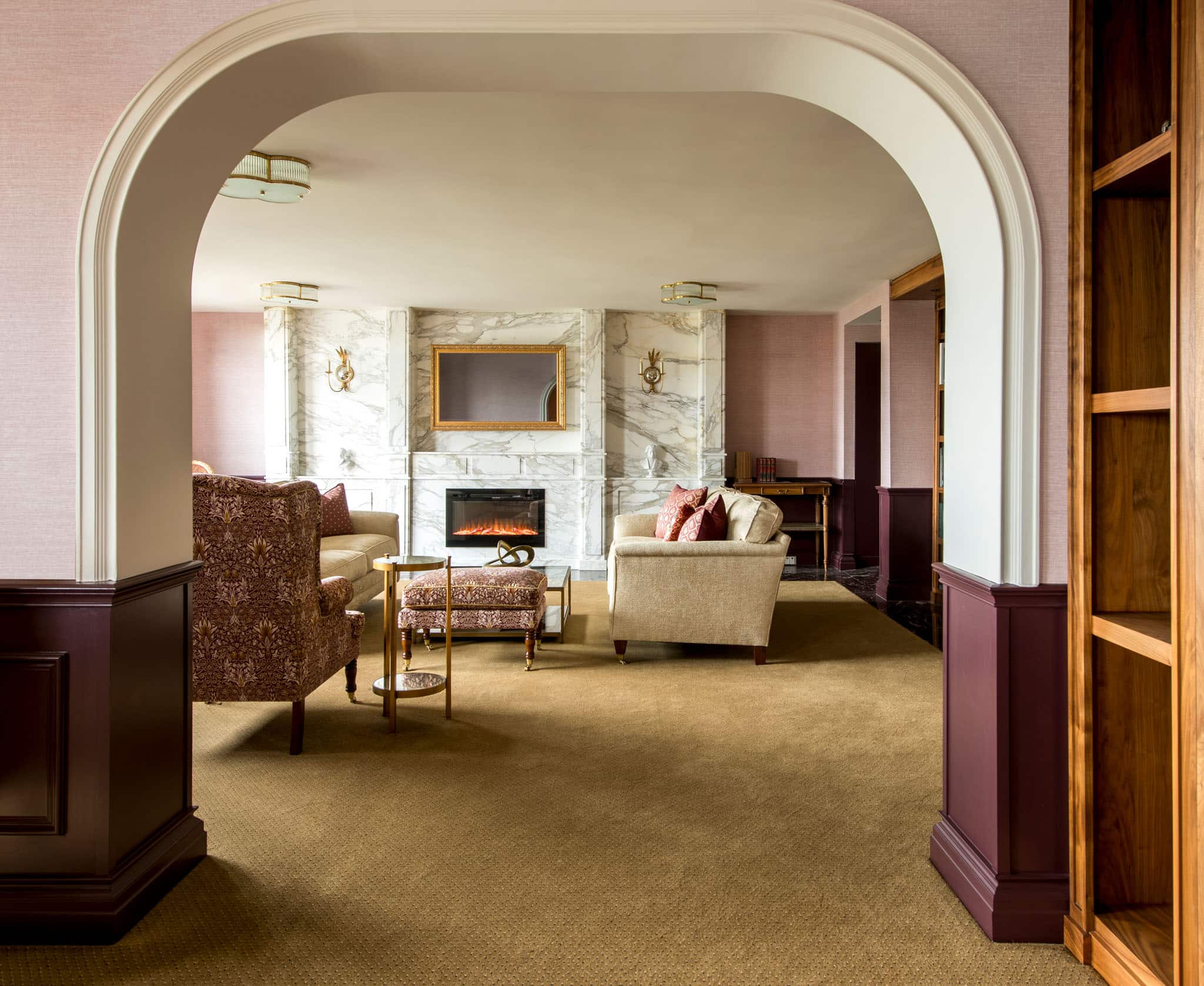
While those inspecting the apartment now would agree that it was ‘fit for a Queen’, when interior designer Tennille Joy first inspected the lower level of the apartment, it was considerably less regal. Commissioned to renovate the lower level, to be used by Harold as his home office, the brief was to create a more seamless arrangement of spaces from what was previously two separate apartments that were separated from the penthouse apartment. Working with Divitcos Architecture, who installed a lift to service the two levels and a new arch between the two old apartments, there’s now a both connection to the penthouse and fluid open plan spaces.
While Tennille lightly touched the upper level of the penthouse which had a few remnants from the 1980s, her main focus was to create a unique environment for Harrold to work in below. While some clients bring Tennille a batch of magazine cuttings when discussing their aspirations, Harold simply handed her two books – one being ‘Paris Hotel Stories’ and the other ‘At the Plaza’. Given his love of sumptuous hotels, these two hotels in Paris and New York, set the tone for this makeover. He was also inspired by classical European design from the late 20th century.
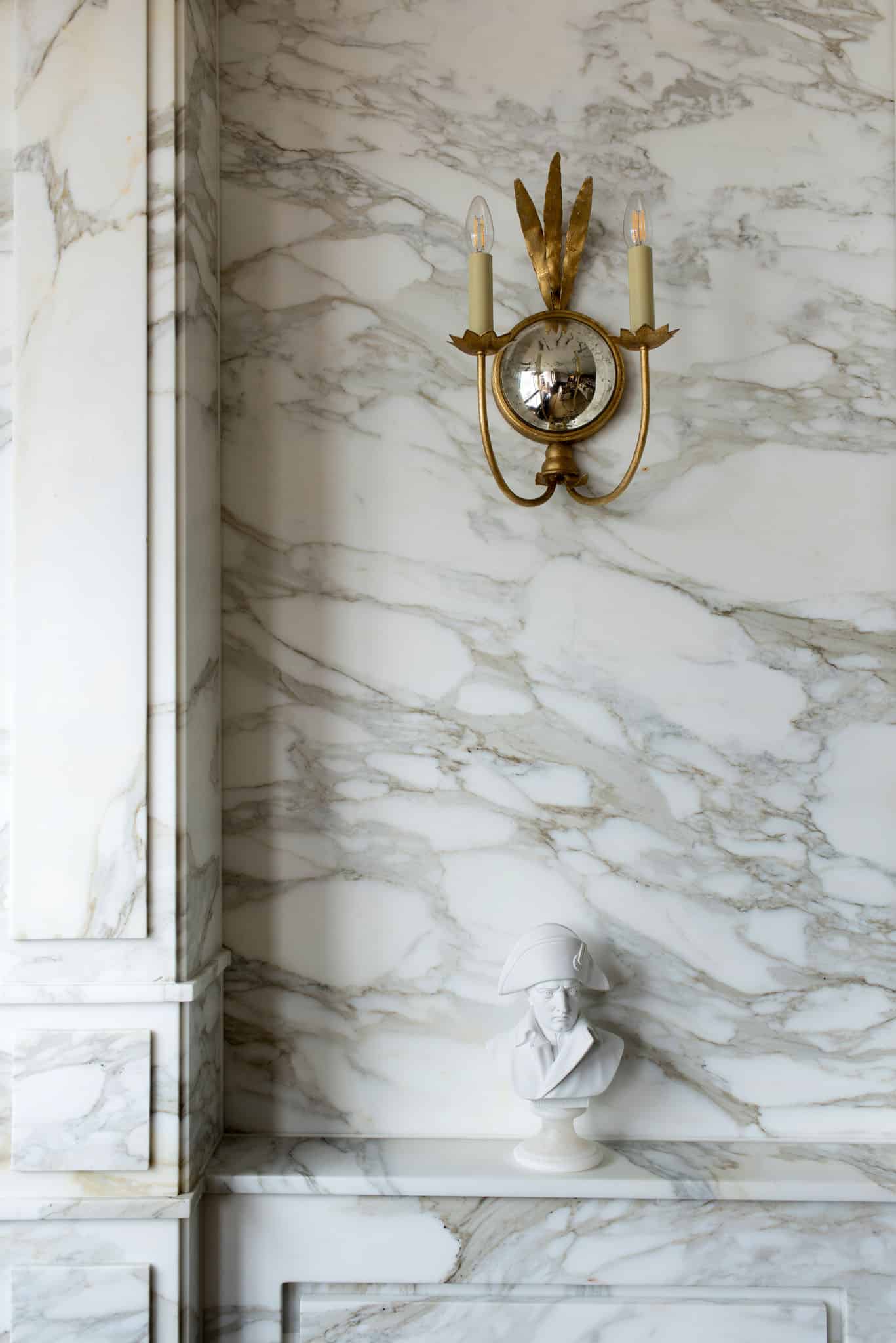
One of Tennille’s first moves was to soften the new arch linking what’s now a library and living area on one side to a dining/meeting area/office on the other. Moulded plasterwork adds depth to the arch as well as a sense of monumentality. The fireplace in the library was designed, with new marble wall and niches, framed by American oak joinery. Tennille also added new drapes, grass weaved wallpapers and wainscot timber work to further add depth. Plush carpet replaced the former linoleum floors. The galley-style kitchen and two powder rooms were also designed, with marble walls and benches, American oak shelves, brass Versace tapware and joinery painted in a rich mulberry hue. The marble itself needed to be taken up the many flights of stairs as each piece was too large to fit in the lift.
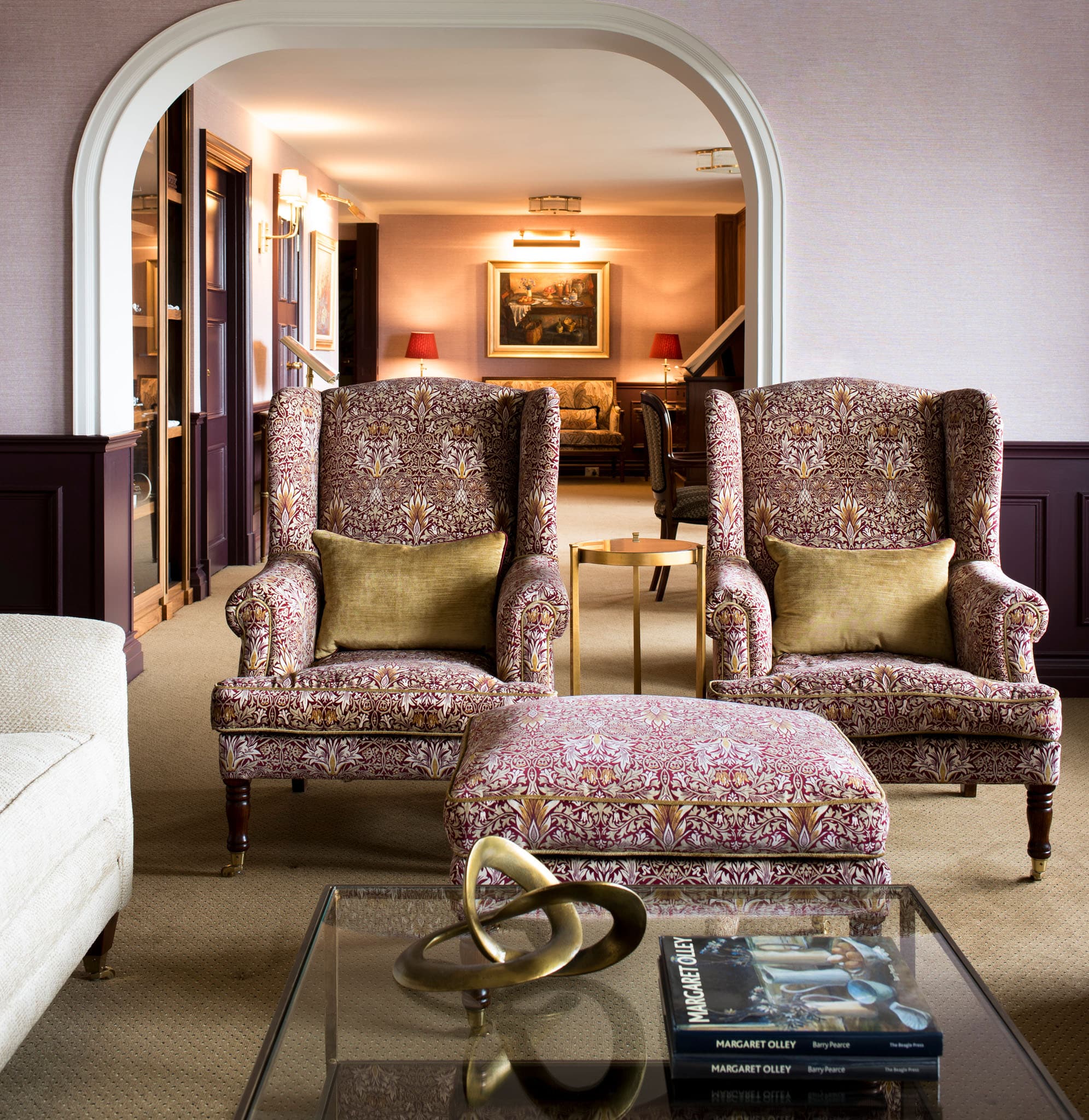
One of the main challenges for Tennille was the low ceiling heights of only 2.2 metres. Hence, there was a concerted effort with each move to create a sense of verticality – be it in the form of vertical stripes in the curtains or using light fittings that were flush with or close to the ceiling. Shadow lines and brass trims also allow the ceiling heights to feel considerably higher. The furniture selected by Tennille also captures the spirit if the late 20th century, with leading protagonist of the Art Nouveau period, William Morris, represented in a number of fabrics selected for the high-backed wing chairs in the library. Tennille recalls with fondness Harold’s instructions that he ‘didn’t want to hear about details’ and had full confidence in what Tennille could achieve.
The brief to design a place ‘fit for a Queen’ is also layered with Tennille’s own connection to the late Queen, having worked with interior designer Kelly Hopper, who was commissioned by the Queen to create her own place, literally a palace. While Harold was fortunate to see Tennille’s reinvention of his apartment, the new owners can simply move in, pour themselves a cup of tea, and enjoy the eastern aspect and views over the Fitzroy Gardens.
Text by Stephen Crafti
